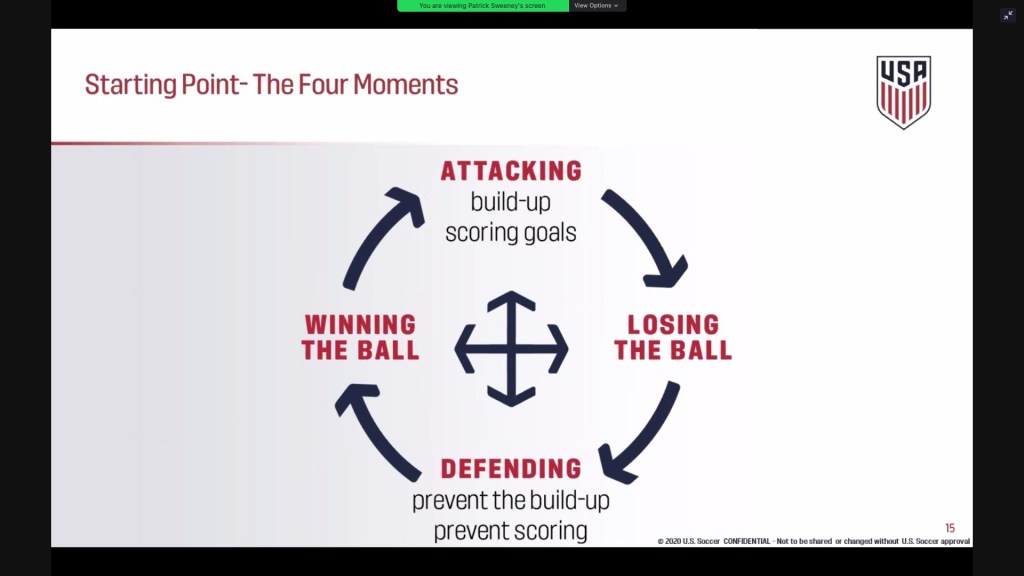
This is part 3 of a 5 part series. After recertifying for US Soccer officiating in 2022, 2023, 2024, 2025 and 2026 the US Soccer Referee Program has made changes in how to handle situations. In 2022 coaches and bench personell were typically not issued cards. There was a training method that believed handling situations before they become situations was the best way until the IFAB provided guidelines for handling bench personnel. I continued to see members of the coaching community turn a blind eye to these points of emphasis. Finally in 2025 US Soccer came out with a new policy.
IFAB on DISSENT
Rule 12-8-1c states that objecting by word of mouth or action to any decision given by an official is dissent. However, simply disagreeing with an official’s decision isn’t always dissent and/or sanctioned by a yellow card. There are several factors to consider in each situation. Referees should evaluate potential dissent by asking if the display is public, personal or provocative. Expressions of frustration or disappointment or private dissatisfaction not directed at anyone can usually be handled by a verbal warning or private discussion with the player. Continual public
complaining, prolonged and repeated actions, or personally directed comments toward the referee of their decision must be dealt with and should be cautioned. Beyond dissent, gestures and language that are inappropriate or foul, abuse directed at an opponent, teammate or official, threats of physical harm, and/or taunting must be dealt with immediately and result in a disqualification to that player. These same considerations should be considered when dealing with coaches or any other individuals in the team area.
- Dissent
a. Players, coaches or fans may be involved.
b. Player may try to cover for their own misplay/ lay blame elsewhere. c. Player may honesty feel he was fouled.
d. Dissent in any events produces a game management situation.
Review Rule 12
A. Examples of persistent infringement:
- Harassment towards the referee by the Coach or player from the bench area.
- Coach continually leaves the team area to give coaching instructions to his players.
- Frequent remarks about the officials’ calls.
- Any player who repeatedly infringes the rules of the game.
• Note: There are many examples of persistent infringement and of course, depending upon what actually occurs on the field, as well as how you interpret the event, it could be viewed as either “dissent” or “unsporting like behavior”.
Meeting notes from PIAA Chapter discussion.
MEETING #6: DISSENT
- RULE STATES: A player shall be cautioned if he/she… shows dissent by word of mouth or action to decisions given by the referee. Player may not show dissent, whatever his/her feelings may be.
- “SHOW DISSENT” IMPLIES: a. Overreaction b. Something you can hear or see
c. Towards or to the referee
d. To others about the referee’s decision - FORMS OF DISSENT: a. Argue b. Oppose c. Disagree d. Object e. Appeal f. Protest g. Plead h. Ridicule
- WHY IS DISSENT SERIOUS?
a. Against the spirit of game
b. Deliberate misconduct
c. Questions game control/authority d. Has effect on others - HOW CAN IT BE CONTROLLED?: a. Whistle b. Counsel/Warn c. Caution
d. Disqualify/ Eject e. Terminate - DISSENT CAN BE:
- By word 1. Baloney ref 2. Are you serious?
- By action 1. Italian salute 2. Finger gestures
- Direct Behavior or Statements 1. Remarks directly to an official, face to face
30
- Indirect Behavior or Statements 1. “Good tackle Joe; he missed it” 2. “Clobber him next time”
- Spontaneous
1. Unintentional Behavior or Statements a) Placing hand on official b) Pointing finger at chest of official - Calculated Behavior or Statements 1. Intended running after official by a coach or player 2. Deliberate – taking card out of official’s hand
- Premeditated Behavior or Statements 1. Mentioning ancestry of official 2. Seeking mercy from fan No change in rule is needed to eliminate problem. Calmly but firmly caution the offender show the yellow card, inform coaches, scorers and other officials.
7. EXAMPLES OF DISSENT:
Player Dissent
a. Mental Tension
b. Frustration c. Retaliatory d. Pain
e. Ridicule
Coach Dissent
a. Inconsistent Calls
1. Letting too many fouls go uncalled
2. Calling tight game – “Let the kids play” 3. Too many drop balls
b. Disagreement
1. No signal
2. Coach has different angle
3. Coach is behind the play
4. Doesn’t speak English very well
c. Losing the game
1. Team scored – cheap goal against his time just before halftime 2. Poor opponent and team is not playing well
3. Playing for playoff berth
d. No team control
1. Team speaks different languages all at the same time
2. Assistantcoachisfillinginforheadcoachwhoisunabletoattend
e. Lack of rule knowledge
1. Plays soccer using different set of rules
31
2. Wantstoplay2on1not1on1.Gangupondefense
HANDBALLS ) OFFSIDE ) DANGEROUS PLAY )
Fan Dissent
a. Sideline meddler
1. First one at game to get a spot 2. Meets you at table
3. Captain of “Cheering” squad 4. Attention seeker
b. Screamer
1. Wants to hear own voice
2. Dressed in trench coats and sneakers 3. Shouts comments to officials
4. Wants to be recognized
WANTS IT ALWAYS CALLED
c. Profanity
1. Group that hollers at opponents and the officials
d. Disruptive behavior
1. They throw item(s) onto the field 2. They bother opposing goalie
Referee Dissent
a. Coach pressure
b. Knowledge of rule c. Out of shape
d. Fellow official
Player Dissent a. Tension
1. Not knowing position 2. First game
3. Misinterpretation of call 4. Leader of team
5. Parents in stands b. Frustration
1. Lack of ability
2. Missed shot
3. Teams losing
4. Averages 4 goals per game
Retaliatory
a. Just deliberate behavior or statements
b. Doesn’t understand advantage rule, stops playing
c. They were in last place season ago because they lost to this team d. Deep seated anger for team
32
Pain a.
b. c. d. e.
Ridicule a.
b. c.
REMEMBER!! OR TEAMMATE
QUESTIONS: SUMMARY:
WHAT TO DO:
- Whistle
- Warn/Counsel
- Caution
- Disqualify
- Terminate the game
CONTROL EARLY ON: STAY CALM, STAY FOCUSED, AND STAY WITH PLAY
COMMUNICATE:

 FCArmstrong
Leave a comment